01274 532 100


A school entrance is often managing several conversations at once: welcoming a new family, directing visitors to reception, sharing a safeguarding reminder and promoting the next PTA event. Well-planned school notice boards give each message a clear, credible place. They help busy parents, pupils, staff and visitors find the information they need without adding clutter to gates, doors and windows.
For schools, a notice board is not simply a display surface. It is part of the wayfinding, safeguarding and communications system across the site. The right board, positioned well and kept current, supports a calmer, more professional environment from the first point of arrival.
Start with the job each notice board must do
The most effective school notice boards are chosen for a specific purpose, rather than bought as a general display solution. A board at the main entrance has a different job from one outside the staffroom or beside the sports hall.
At reception or the main gate, priority information should be simple and visible at a glance. This might include term dates, emergency contact details, visitor instructions, school values, safeguarding information and key event notices. Parents dropping off children have limited time, so long blocks of text and crowded displays are unlikely to be read.
Internal boards can carry more detailed material. Staff communication boards may include duty rotas, health and safety updates and meeting information. In corridors, classroom displays and pupil celebration boards can strengthen identity and recognise achievement. A sixth form or college board may need to make careers, wellbeing and examination information easy to locate.
Before choosing a format, ask three practical questions: who needs to read the board, what action should they take, and how often will the content change? The answers will determine its size, location, security and the best method of display.
Outdoor school notice boards need to withstand daily use
An external notice board works hard. It must cope with rain, wind, sunlight, changing temperatures and frequent use by office staff. It also needs to keep information presentable. A curled paper notice behind a misted panel sends the wrong message before anyone has read it.
Weather-resistant, lockable boards are a sensible choice for entrances, car parks, gates, playgrounds and routes used by visitors. Glazed doors protect notices from rain and reduce the risk of tampering, while a secure lock gives authorised staff control over what is displayed. This matters where the board includes names, events or information that should not be altered or removed.
Consider sightlines as carefully as the board itself. A board mounted behind a gate, hidden by planting or facing away from the main pedestrian route will be missed. Place it where people naturally pause: near the entrance, next to the pedestrian gate, beside reception or along the route from the car park.
Height also matters. A parent information board should be comfortable for adults to read, while boards designed for pupils need to be accessible and appropriately positioned. On a shared site, separate boards can prevent key messages being lost among general notices.
Choose the right capacity and layout
A board that is too small becomes overloaded within weeks. A board that is too large can look sparse and be difficult to keep current. Start by reviewing the notices usually displayed during the busiest point in the school year, rather than the quietest.
Allow room for permanent information, such as a safeguarding statement or school contact details, alongside changeable notices. If weekly newsletters, holiday activities, attendance reminders and community events all compete for space, consider splitting them across two boards: one for essential school information and one for events and wider community material.
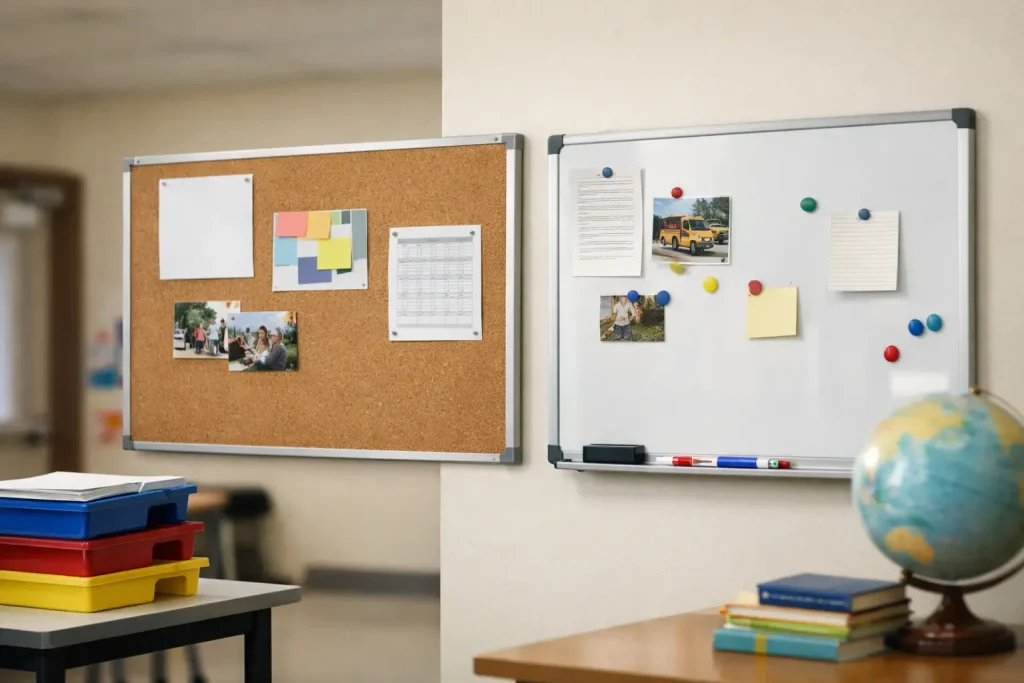
The display surface is important too. Felt-backed boards offer a familiar, flexible option for pinning paper notices. Magnetic surfaces can make updates quicker where staff regularly use printed sheets, magnetic frames or reusable headings. For a more formal entrance display, poster cases and lockable framed systems can keep individual notices neat and protected.
A consistent layout makes a substantial difference. Use a clear heading, limit each notice to one message and leave space between items. Important updates should sit at eye level, with date-sensitive material grouped together. If a notice has expired, remove it promptly. Out-of-date information creates uncertainty, particularly where it relates to events, collection arrangements or contact details.
Make essential messages impossible to miss
Not every communication has equal weight. Safeguarding contacts, emergency arrangements and visitor procedures should never compete visually with raffle tickets or menu updates. Use a designated area, contrasting headers or a separate board for high-priority information.
This approach is particularly valuable at reception. Visitors need immediate reassurance about where to report, how to sign in and the expectations for being on site. Clear, visible information supports staff, reduces repeated questions and helps reinforce safeguarding procedures without making the entrance feel unwelcoming.
Keep the content useful, not crowded
A notice board only works when people trust that it contains current information. That calls for ownership. Assign responsibility for checking boards at set intervals, with a clear process for removing expired notices and approving new material.
For many schools, a weekly check is enough for general displays, while entrance and safeguarding boards should be reviewed more regularly. Before major dates such as parents’ evenings, school productions, open events or examinations, check that every displayed instruction is accurate and easy to understand.
Good notice-board content is concise. Use plain language, large type and strong contrast between text and background. Avoid relying on colour alone to communicate meaning, as this can reduce accessibility for some readers. Where families may speak a range of languages, visual symbols and short, direct phrasing can help make essential messages clearer.
Photographs of pupils, names and personal information require particular care. Follow your school’s image-consent and data-protection procedures before displaying any material. Celebration displays can be positive and motivating, but they should be managed with the same attention given to any other public-facing communication.
Match the board to the character of the school
Practical does not have to mean plain. Notice boards can support a school’s visual identity through coordinated colours, headings, logo panels and well-designed templates. A tidy entrance board helps visitors feel that the site is cared for, while child-friendly boards can make younger pupils feel represented and included.
There is a balance to strike. Bright colours and themed borders may work well in a nursery or primary setting, but an entrance display should still be readable and professional. Secondary schools, academies and colleges may prefer a more streamlined appearance that complements their wider branding and signage.
Where a site has inconsistent signs, ageing display cases and paper notices fixed to every available surface, replacing one board alone may not solve the problem. A small display plan can help identify which messages belong at the gate, entrance, reception, playground, staff areas and classrooms. This prevents duplication and gives every board a useful role.
Signs 2 Schools works with education settings that need display solutions to sit alongside safety, wayfinding and entrance signage, creating a more organised experience for pupils, families and visitors.
Installation and maintenance should be planned early
A notice board needs a secure fixing method suitable for its location. Wall-mounted boards are often ideal near reception and covered walkways. Post-mounted boards can be more visible at gates, car parks and open approaches, but need sufficient space and a stable installation. Check that doors can open fully, notices can be changed safely and the board will not obstruct access routes.
Think about ongoing maintenance before purchase. Lockable boards need keys managed properly. Glazed panels should be cleaned so notices remain visible, and damaged pins, magnets or seals should be replaced before they affect use. If the board is in direct sunlight, review whether fading will be an issue for printed materials.
The most successful notice boards become part of the school routine, not an afterthought. They offer a dependable place for the information people genuinely need, reduce avoidable confusion and make the school feel prepared before a visitor has even reached reception.