01274 532 100


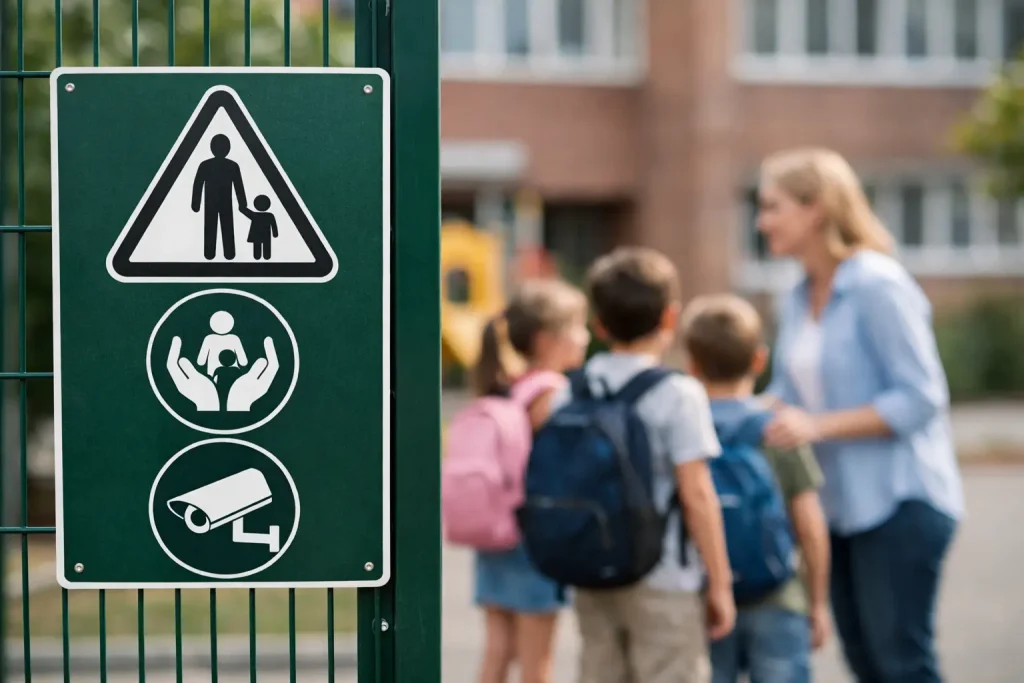
A visitor who cannot find the reception, does not know they must sign in, or is unsure how to report a concern creates an avoidable safeguarding gap. Knowing how to create safeguarding signboards means turning essential procedures into clear, visible instructions at the point where people need them – from the school gate to the main office and every controlled entrance.
For schools, nurseries and colleges, safeguarding signage must do more than display a policy statement. It needs to guide behaviour, support staff at busy times and give visitors confidence that safeguarding is taken seriously. The most effective boards are concise, well positioned and designed around the way people actually move through the site.
Start with the safeguarding journey through your site
Before choosing wording, walk the site as a first-time visitor. Begin at the pedestrian entrance or car park, continue to the main reception and consider any secondary entrances, nursery gates, sports facilities and community-use areas. At each point, ask one practical question: what does this person need to know or do now?
At the perimeter, the priority may be directing visitors to the correct entrance and reminding them that the site is private. At reception, it is likely to be signing in, wearing a visitor badge and waiting to be collected. In a meeting room or visitor area, the message may be how to raise a concern about a child or young person.
This approach prevents a common mistake: placing all safeguarding information on one busy noticeboard. A single large board can be useful at reception, but it cannot replace clear prompts at gates, doors and sign-in points. Safeguarding messages work best when they are delivered in stages.
Decide which messages need a signboard
Every school will have its own procedures, but most safeguarding signboards cover a small number of recurring needs. These include visitor management, site access, reporting concerns and appropriate conduct while on site.
A clear reception sign might state that all visitors must report to reception, sign in and wear a badge at all times. A separate message can make it clear that visitors must not enter classrooms or move around the site unaccompanied unless authorised. This protects pupils while giving office staff a simple, visible standard to refer to during busy arrivals.
For a safeguarding reporting board, include the name, role and contact route for the designated safeguarding lead, with deputy details where appropriate. Keep this information current. A safeguarding board that still names a former member of staff, or directs people to an unused extension number, can cause confusion at exactly the wrong moment.
Where the site welcomes contractors, supply staff, parents, volunteers or hirers, consider a concise visitor code of conduct. It can cover expectations such as signing in and out, displaying identification, using approved toilets or staff areas, following photography rules and reporting concerns immediately.
How to create safeguarding signboards with clear wording
Good safeguarding wording is direct. It does not need to sound legal or overly formal to be taken seriously. In fact, lengthy text is often ignored by people who are arriving late, carrying equipment or managing a child.
Use an action-first structure. Tell people what to do, where to go and who to speak to. For example:
- “All visitors must report to reception and sign in.”
- “Please wear your visitor badge at all times.”
- “Do not enter the school site without permission.”
- “If you have a safeguarding concern, speak to the Designated Safeguarding Lead.”
- “Photography and filming are not permitted without prior authorisation.”
Avoid vague wording such as “Safeguarding is everyone’s responsibility” when it is used on its own. The statement is true, but it does not tell a visitor what action to take. It is more useful as supporting text beneath a practical instruction, such as: “If you are worried about a child, report your concern to reception immediately.”
The balance depends on location. A school gate needs a short message that can be read quickly. A reception safeguarding board can provide names, photographs of key staff if the school prefers, and fuller instructions. Keep sensitive information out of public view. A board should explain how to report a concern, not display confidential procedures or personal details that do not need to be shared.
Make the design easy to read at a glance
Safeguarding messages have to compete with notices about clubs, payments, events and daily school life. Give them enough visual priority to be noticed without making the environment feel hostile or cluttered.
Use a clear heading, high-contrast colours and a straightforward typeface. Dark text on a pale background is usually easiest to read, while bold colour panels can be used to separate key actions such as “Sign in here” or “Report a concern”. Avoid pale text on bright colours, overly decorative fonts and long blocks of capital letters.
Think carefully about size. Text that is clear at arm’s length may be useless beside a vehicle gate or across a reception area. Larger signboards suit entrance routes and external walls, while smaller rigid signs can reinforce individual actions at doors, signing-in points and visitor waiting areas.
Pictograms can help where young visitors, families with limited English or people unfamiliar with the site may be present. A reception symbol, visitor badge icon or camera symbol can make the purpose clear quickly. However, icons should support plain English, not replace it.
For external safeguarding signs, choose a material that suits the location. Weather-resistant rigid boards are generally appropriate for gates and perimeter areas. Indoor boards may allow more flexibility, particularly where names or contact details need updating. If details are likely to change frequently, use a designed panel with a replaceable insert rather than ordering a full new sign each time.
Position signs where they change behaviour
A perfectly designed signboard is ineffective if it is hidden behind a plant pot, placed too high to read or surrounded by outdated posters. Position each sign where the required action happens.
At the entrance, place visitor direction signs before a person reaches a decision point. At reception, position sign-in instructions beside the actual signing-in system, not across the room. At staff or contractor entrances, make requirements visible before someone can enter the building. If the school has several gates, do not assume everyone uses the main one.
Height matters too. Signs intended for adults should be readable at normal standing height, while child-facing safeguarding messages may need to be lower. Avoid placing essential information behind a reception hatch that is closed outside office hours. For evening lettings or community users, safeguarding instructions may need to be visible at the relevant entrance and within the hired area.
Keep the board accurate, consistent and part of procedure
Signage supports safeguarding practice, but it does not replace staff training, visitor checks or a clear safeguarding policy. A board can remind someone to sign in, but the school still needs a reliable process for checking identification, issuing badges and challenging unfamiliar adults on site.
Make one person or team responsible for reviewing safeguarding signboards. This is particularly useful at the start of each academic year, after staffing changes, when visitor processes change or following a site security review. Check that names, roles, phone numbers and room locations are correct, and remove duplicate or contradictory notices.
Consistency also matters. If the signboard says visitors must wear badges, make sure badges are available and staff know what to do when somebody is not displaying one. If the board directs concerns to the designated safeguarding lead, reception staff should know the escalation route if that person is unavailable. The wording should match the school’s current policy and local procedures.
Choose a school-focused format
The right safeguarding signboard depends on the site and the message. A permanent external entrance sign needs durability and strong visibility. A reception safeguarding display may need a professional, welcoming layout with room for photographs and updated contact details. Smaller signs can reinforce visitor rules at access-controlled doors, while pavement signs may help direct parents and visitors during events when used safely and brought in afterwards.
Custom signage is often worthwhile where a school has multiple buildings, a branded reception area or a particular visitor process. It allows the same clear safeguarding language, colours and visual style to run across the whole site. Signs 2 Schools can help education settings translate their procedures into practical signage that is clear for visitors and suitable for everyday school use.
A safeguarding signboard should make the safe action the easy action. When visitors can immediately see where to go, what is expected and how to raise a concern, staff can spend less time correcting confusion and more time focusing on pupils.