01274 532 100


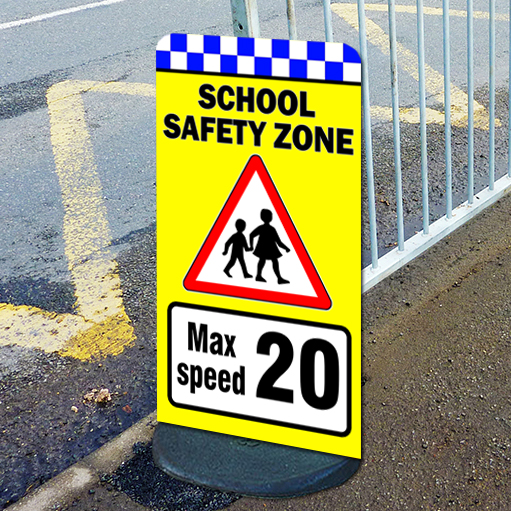
At 8.35am, a school car park can become one of the busiest and least predictable parts of the site. Cars stop on zig-zags, parents reverse while children cross between vehicles, and an unattended entrance can quickly become congested. Knowing how to reduce unsafe school parking starts with treating arrival and collection as a safeguarding and site-management priority, not simply a parking issue.
A safer school gate does not always require major building work or a large car park. Clear expectations, visible traffic controls and well-positioned signs can make a meaningful difference. The most effective arrangements give drivers simple instructions before they reach the problem area, while making safe walking routes obvious for pupils and visitors.
Start with the patterns causing the risk
Before ordering signs or changing barriers, observe what happens at the beginning and end of the school day. A short review over several days is more useful than relying on one difficult morning. Ask a member of staff to note where vehicles queue, where drivers turn or reverse, where pupils cross, and whether pedestrians are forced to walk in the roadway.
Look beyond the school gates too. Dangerous behaviour often starts on the approach to the site. A narrow entrance, unclear visitor parking, double yellow lines or a lack of short-stay space can encourage drivers to stop where they should not. The issue may be less about a lack of parking and more about an unclear system.
Speak to the people managing the area each day. Site staff, office teams, crossing patrols and parent volunteers often know exactly where the near misses occur. Their experience can identify practical changes that are easy to overlook on a site plan, such as a gate that should remain closed at drop-off time or a delivery vehicle arriving at the wrong point in the day.
It is also sensible to record concerns and incidents. This creates a clear basis for decisions, helps explain changes to parents and supports conversations with the local authority where highway issues are involved.
How to reduce unsafe school parking with clear zones
The safest parking arrangements make it easy for people to understand where they should and should not be. Confusion leads to hesitation, sudden manoeuvres and drivers making their own judgement in a busy environment. Use named, clearly signed zones for vehicles, pedestrians and visitors.
A typical school site may need a no-stopping area close to the gate, a signed drop-off point, accessible parking, staff-only bays and a separate delivery area. These do not all need to be elaborate. What matters is that the instruction is visible, specific and placed before the driver reaches the decision point.
For example, a sign at the gate saying “No parking” may be ignored if a parent has already entered a narrow driveway with nowhere to turn. A more effective approach is to place advance signage on the approach, reinforce the message at the entrance and use a clearly marked turning or drop-off area where space allows.
Pavement signs can be particularly useful at arrival and collection times. They provide a temporary but prominent reminder such as “Keep Clear – No Parking”, “Please Do Not Block Our Entrance” or “Protect Our Children, Turn Off Your Engine”. Their visibility makes them suitable for areas where fixed signs are not possible or where a message needs to change during the day.
Separate people from moving vehicles where possible
Physical separation is one of the strongest safety measures a school can introduce. Pedestrian gates should be clearly identifiable and, where practical, positioned away from vehicle entrances. Marked walkways, railings, bollards and directional signs can guide pupils from the pavement to the gate without crossing a live traffic route.
On compact sites, full separation may not be possible. In that case, reduce vehicle movement at peak times. A managed one-way route can prevent cars from reversing or meeting head-on, but only if the route is clear enough to follow and there is adequate room to turn. A poorly designed one-way system can simply shift congestion elsewhere.
Consider whether some gates should be vehicle-free during the school run. Closing a secondary vehicle access for 20 minutes may create a calmer pedestrian route, provided emergency access and site operations have been properly considered. This is a decision for each site, not a standard rule.
Make visitor and delivery arrangements unmistakable
Visitors who do not know where to park may stop at the main entrance, block a crossing point or enter a staff-only area. Prominent entrance signs should direct them to reception and identify any visitor spaces before they reach the gate.
Deliveries need the same level of planning. Where possible, arrange delivery times outside arrival, break and collection periods. Signs stating delivery directions, restricted times and site contact details can reduce the chance of a lorry entering a crowded playground or manoeuvring near pupils.
Use signs that people can read while driving
A parking control sign is only effective if drivers see it in time and understand it immediately. Small text, vague wording and signs hidden behind parked cars will not change behaviour. Keep the message short, use clear contrast and position it at a driver’s eyeline where it can be read safely.
Schools often benefit from repeating key messages. A roadside sign can warn drivers before the entrance, a gate sign can reinforce the instruction, and a pavement buddy can provide a final reminder at the point of risk. Repetition is not overkill when the audience changes every day and many drivers are concentrating on children, traffic and time pressures.
Child-friendly graphics can make messages more noticeable, especially around primary schools and nurseries. However, the instruction must remain direct. A friendly design should support the safety message, not obscure it. For secondary settings, a clean and authoritative parking control sign may be more appropriate.
Durability matters as well. External signs need to cope with rain, wind, sunlight and regular use. Choose materials suited to the mounting location, whether that is a wall, fence, gate, post or pavement. A faded or damaged sign can suggest that the rule is no longer enforced.
Pair signage with consistent routines
Signs set the expectation, but staff routines make that expectation credible. If a gate is marked “Keep Clear” yet staff vehicles regularly stop there, parents will follow the example. Agree the rules internally before communicating them externally.
At the start of a new term, explain any parking changes in a clear parent communication. Set out the reason in practical terms: protecting children crossing the entrance, keeping emergency access open, or preventing congestion on the approach road. A respectful explanation tends to achieve better co-operation than a warning alone.
For persistent problems, a visible staff presence at the gate can help during the first few weeks. The aim is not to confront parents but to direct traffic, answer questions and reinforce the new routine. If enforcement on public roads is required, the school may need to work with the local authority, parking enforcement team or police rather than attempting to manage it alone.
Avoid creating rules that families cannot reasonably follow. For example, asking parents not to park near the school is unlikely to work unless there is a practical alternative, such as a signed walking route from nearby parking, a park-and-stride location, or staggered collection arrangements. The right balance depends on the age of pupils, local road layout and the number of families travelling by car.
Review the site after changes are introduced
Traffic behaviour can improve quickly, but the first solution is not always the final one. Check the site again after a few weeks. Are drivers using the intended drop-off point? Has congestion moved to a neighbouring street? Are pedestrians following the marked route? Are signs visible when larger vehicles are parked nearby?
Invite feedback from staff and families, then make targeted adjustments. Moving a sign, adding a directional arrow or introducing a second pavement sign may solve an issue without further disruption. Where the layout needs a more permanent improvement, a custom school parking sign or site-specific wayfinding solution can bring the whole arrangement together.
Signs 2 Schools supports education settings with parking control, road safety and entrance signage designed around the way schools operate. The most successful schemes are practical: they give every driver a clear instruction, give every child a safer route, and give staff a site that is easier to manage.
A calm arrival and collection period is built one clear decision at a time. Start with the point where pupils are most exposed, make the safe choice obvious, and keep improving the route until it works reliably on an ordinary busy morning.