01274 532 100


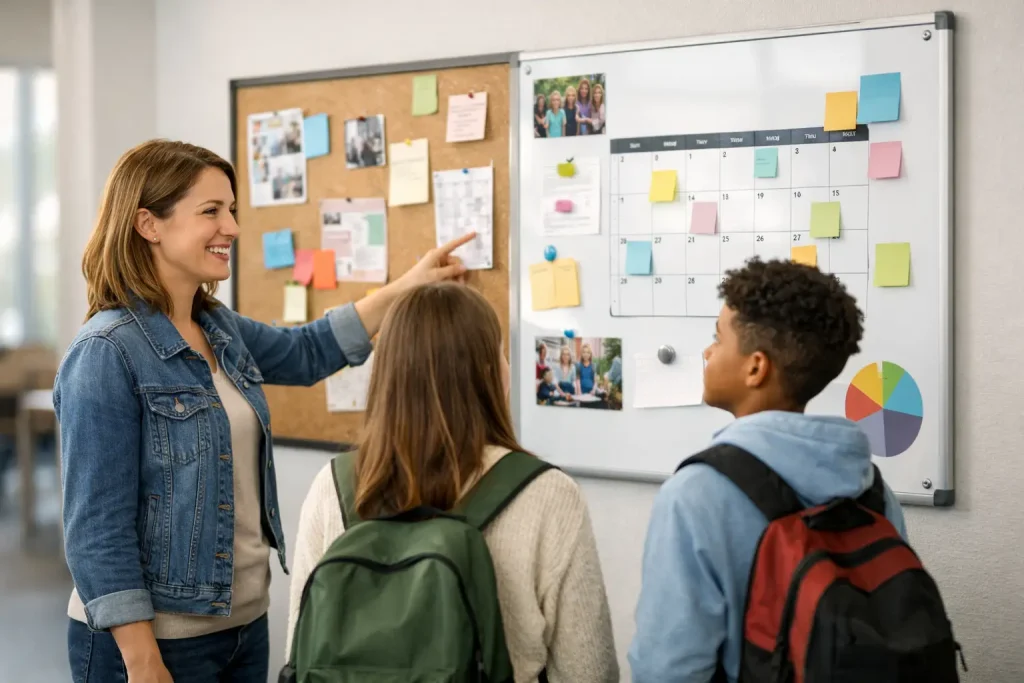
A parent arriving late for a reception appointment should not have to guess where to go. A visitor should be able to see safeguarding guidance before entering the site. Staff should not need to search three different corridors for a critical update. Well-planned school noticeboards make everyday communication clearer at the point it matters.
For schools, nurseries, academies and colleges, a noticeboard is more than somewhere to pin a poster. It is a practical display point that can support safeguarding, reinforce site rules, celebrate achievement and give parents confidence that the school is organised, welcoming and well managed.
Start with the job each noticeboard must do
The most effective school noticeboards have a clear purpose. Trying to use one board for every message usually leads to clutter, outdated papers and important information being missed. Before choosing a size, frame or location, decide who needs to read it and what action, if any, they need to take.
An external parent noticeboard near the main gate may carry dates, newsletters, attendance reminders and information for families who do not regularly access digital communications. A reception board is better suited to visitor procedures, safeguarding contacts, emergency information and site directions. In staff-only areas, a board can hold training notices, rotas or health and safety updates.
Pupil-facing boards need a different approach. They work best when content is short, visible and relevant to the location. A board near the dining hall might promote healthy eating or lunchtime clubs, while one outside a classroom can display curriculum work, reading recommendations or pupil achievements.
Separate essential information from celebration
There is a genuine place for colourful displays of artwork, sports results and school values. These help create a positive environment and show visitors the life of the school. However, statutory or safety-critical messages must not compete with layers of decorative material.
Where possible, provide a dedicated board for formal notices and another for community or pupil content. This makes it easier for staff to keep essential information current and lets celebratory displays remain engaging rather than constantly being cleared for the next operational update.
Choosing indoor or outdoor school noticeboards
Location determines the specification. An indoor noticeboard in a locked staff room has very different requirements from one installed beside a public footpath or busy entrance.
For indoor use, consider the available wall space, whether the board needs a fabric, felt or pinnable backing, and how often information changes. Aluminium-framed boards provide a tidy, durable finish in corridors, reception areas and classrooms. If a display is regularly updated by several members of staff, a simple open board may be the most practical option.
Outdoor noticeboards need to protect content from rain, wind, sunlight and unauthorised interference. A weather-resistant, glazed and lockable board is usually the right choice for school entrances, playgrounds and community-facing areas. It keeps printed notices legible and presentable, rather than curled, faded or soaked after a few days of poor weather.
The trade-off is access. A locked board gives better protection, but a keyholder must be available when updates are needed. For a board that changes daily, such as one displaying breakfast club information or temporary gate arrangements, consider who will manage it before choosing a lockable case.
Size should follow viewing distance
A board may look generous on a product page but feel cramped once it is filled with A4 sheets. Equally, a large display installed in a narrow corridor can become difficult to read without blocking movement.
Think about where people will stand. Parents viewing a board from the pavement need larger headings and fewer notices than staff reading at close range. Allow enough room around each item so people can quickly identify dates, times and contact details. If the board is intended for a busy school gate, clear information at a glance is more useful than a dense collection of documents.
Put information where people naturally stop
The best location is rarely the first empty wall. Noticeboards should be positioned where the intended audience already pauses, queues or waits, without creating an obstruction or encouraging people to gather in an unsafe area.
At the main entrance, a board can introduce the school, communicate expectations and direct visitors to reception. Near pedestrian gates, it can reinforce parking and drop-off messages, remind families about road safety, or publicise key events. In larger sites, boards near junctions can support wayfinding by pairing notices with clear directional signs.
Avoid placing displays behind doors, in poor light or at a height that excludes children, wheelchair users or shorter adults. Consider glare too. A glazed board facing direct sunlight may be difficult to read for much of the day. Site managers can often identify the right position by observing arrival and collection for one week: where do parents wait, and what questions are office staff repeatedly asked?
Keep safeguarding and safety messages clear
Schools carry a responsibility to communicate safeguarding, security and health and safety information in a way that is visible but appropriate. A noticeboard can support this, but it should not become the only place critical information is held.
At reception, clearly displayed visitor expectations can explain signing-in procedures, identification badges, mobile phone rules and where visitors must report concerns. Safeguarding contact details should be current, easy to find and presented professionally. In staff areas, safeguarding and emergency information may need more detail, with access controlled according to the school’s procedures.
For external displays, keep content suitable for public viewing. Do not post pupil names, photographs, attendance details or event information that could create avoidable privacy or security concerns. It is sensible to agree a simple approval process so staff know what can be displayed and who is responsible for checking it.
Health and safety notices also benefit from a dedicated space, particularly near kitchens, workshops, sports facilities and staff rooms. The wording should be direct, readable and relevant to the activity taking place. A faded generic poster rarely changes behaviour; a clearly displayed local instruction is more likely to be noticed.
Make every display easier to maintain
A noticeboard only remains useful if somebody can update it without turning it into a time-consuming task. Allocate ownership for each board, even if it is shared between the office and site team. The owner does not need to create every notice, but they should have authority to remove items that are no longer accurate.
Use consistent paper sizes and simple templates for regular messages. A recognisable heading style and school colours can make information easier to scan, while still leaving room for pupil work and seasonal content. For formal notices, include a date displayed and a review date where appropriate. This prevents last term’s event posters or expired policy reminders from undermining confidence in the board.
It also helps to plan changes around the school calendar. At the end of each half term, take ten minutes to check dates, contact names, emergency information and event notices. Before open evenings, performances or transition events, review whether parents can find the details they need without asking at reception.
Match the board to the school environment
A primary school may favour welcoming colours, clear icons and displays positioned at child height. A secondary school or college may require larger, more formal boards for exams, careers information, timetables and student services. A nursery needs durable, accessible displays that support communication with families at drop-off and collection.
There is no single right design. The key is to select materials, capacity and security features that suit the location and the people using them. For a front-of-school installation, appearance matters alongside durability. A neat, branded noticeboard sends a better message to prospective parents and visitors than paper notices taped to a window.
Signs 2 Schools supplies display and signage solutions designed around the practical demands of education sites, from welcoming entrance areas to safety-focused information points. The right board should look at home on your site while making day-to-day communication easier for staff.
Before ordering, walk the site with a simple question in mind: what does each person need to know at this exact point? That answer will guide the right noticeboard, the right location and the right content – and help your school communicate with greater clarity every day.