01274 532 100


A visitor walks through the wrong gate, a contractor starts work without signing in, or a parent is unsure where to report a concern. These are everyday site-management issues, and clear school safeguarding signs help prevent uncertainty becoming a risk. The right message, placed where people need it, supports the procedures your staff already work hard to maintain.
Safeguarding signage is not a substitute for trained staff, well-managed visitor processes or a strong safeguarding culture. It is, however, a visible and practical part of that culture. It tells pupils, parents, visitors and contractors what is expected on site, where boundaries sit and who they should speak to if they need help.
What school safeguarding signs should communicate
A school site has several audiences moving through it each day. Pupils need simple, reassuring information. Parents need clear direction at busy drop-off and collection times. Visitors and contractors need firm instructions before they pass beyond reception. Staff need messages that reinforce established procedures without cluttering corridors or entrances.
The most effective signs focus on a specific action. Rather than using broad wording about safety, tell visitors to report to reception, wear a visitor badge, sign in and out, or not use mobile phones or cameras on site. Where there is a designated entrance, waiting point or safeguarding lead contact point, make it easy to find.
The wording should be direct, respectful and appropriate to the setting. A nursery may use warm, child-friendly graphics alongside clear adult instructions. A secondary school or college may require more formal visitor and security messaging. The principle is the same: people should understand the rule in a few seconds, without needing to ask what it means.
Key areas for safeguarding signage around school sites
Reception and the main entrance
Reception is the natural starting point for safeguarding communication. A clear sign should direct all visitors to sign in, show identification where required and collect or wear a visitor badge. It can also state that visitors must remain accompanied unless the school has authorised otherwise.
This is particularly valuable where the reception area is shared, busy or not immediately visible from the gate. A well-positioned exterior sign prevents people from wandering around the building looking for an entrance. Inside, a matching reception sign creates a consistent process from the moment someone arrives.
Consider including a concise message about the school’s commitment to safeguarding. It sets the right expectation without turning the entrance into a wall of policy text. Detailed procedures belong with staff and in visitor information, while the sign should make the immediate next step unmistakable.
Visitor, contractor and identification controls
Contractors often arrive early, work in different parts of the site and may not know the school layout. Signs at vehicle gates, delivery points and entrances should direct them to the correct reporting location before work begins. This is especially useful where a caretaker, estates team or office team cannot meet every arrival at the gate.
Visitor badge signs are a simple visual prompt for staff as well as guests. If everyone on site knows that authorised visitors display identification, an unbadged adult is more likely to be noticed and politely challenged. This only works when the school applies the rule consistently, including during events and busy periods.
For sites with multiple buildings, temporary works or community lettings, it may be necessary to use additional signs rather than relying on one notice at the main gate. The aim is not to make the site feel unwelcoming. It is to remove ambiguity at the points where unauthorised access is most likely.
Photography, mobile phones and privacy
Clear photography and mobile phone signage helps schools protect pupils’ privacy and manage expectations for visitors. It is useful at receptions, performances, sports days, changing areas and early years settings, where the risk of accidental or inappropriate photography can be higher.
The exact wording should reflect your own policy. Some schools prohibit photography throughout the site. Others allow it only at agreed events, subject to staff direction. A sign should support that rule, not create a different one. If photographs are permitted at an event, communicate the boundaries clearly and make sure staff know how to respond if those boundaries are ignored.
Pupil support and reporting concerns
Safeguarding signs can also help pupils understand where to go when they are worried. Age-appropriate posters can identify a trusted adult, pastoral office, wellbeing room or other agreed reporting route. For younger children, names, photographs or simple icons may be more effective than dense text. For older pupils, discreet signs in toilets, changing areas, libraries or corridors can point towards support without drawing unwanted attention.
This is one area where placement needs careful thought. A highly visible sign may encourage some pupils to seek help, but others may prefer privacy. Ask pastoral staff and pupils what would make information easiest to use. The best approach differs between a primary school, a large secondary campus and a specialist setting.
Site boundaries, gates and parking areas
Safeguarding starts before someone reaches the building. Signs at perimeter gates can state that all visitors must report to reception and that unauthorised access is not permitted. At vehicle entrances, messages can separate pedestrian and vehicle routes, direct deliveries and reinforce gate-closing procedures.
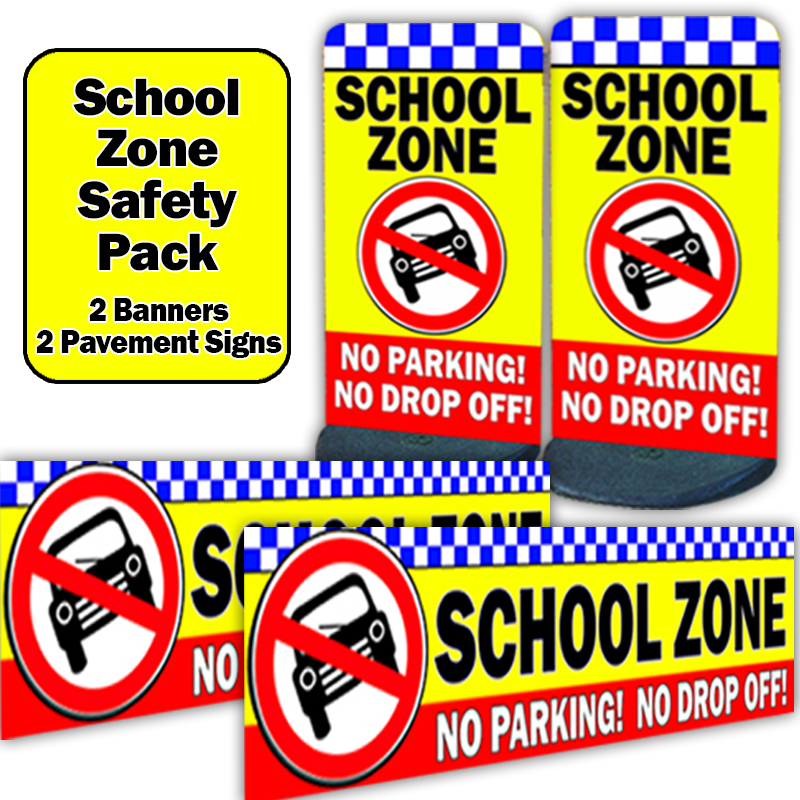
Parking and traffic signs have a safeguarding role too. Congested gates, vehicles mounting pavements and parents stopping in restricted areas create risks at the busiest times of day. Clear no-parking, keep-clear, speed limit and pedestrian-route signs support safer movement for children and help staff manage difficult conversations consistently.
Where a school uses a locked gate or controlled entry system, a sign explaining how visitors should gain access can reduce people attempting to follow others through. The wording should be helpful but should not reveal unnecessary detail about security arrangements.
Choosing effective school safeguarding signs
Material, size and location matter as much as the message. An indoor laminated poster may be suitable for a staff-only corridor, but it will not last at a windy entrance or beside a car park. Exterior signs need durable, weather-resistant materials, readable lettering and secure fixing. Freestanding pavement signs can be useful for temporary events or changing access arrangements, provided they do not obstruct walkways or create a trip hazard.
Visibility is not simply about making a sign bigger. Think about who needs to read it, how quickly they are moving and what else competes for their attention. A driver approaching a gate needs a short message in large type. A visitor standing at reception can take in more detail. Where a rule applies to both locations, use coordinated wording so the message is reinforced rather than repeated inconsistently.
Colour and design should support legibility. High-contrast text, recognised safety symbols and uncluttered layouts make signs easier to understand. School branding and welcoming colours can sit comfortably alongside clear safety messaging, particularly on main entrance signage. The result should feel like part of the school environment, not an afterthought taped to a door.
Turn policies into visible routines
Before ordering new signage, walk the site as a first-time parent, visitor and contractor would. Start at the pavement or car park, then follow the route to reception, classrooms, halls, external play areas and any shared facilities. Note every point where someone could be unsure where to go, what to do or whether they are permitted to continue.
It helps to involve the people who deal with these issues daily: reception staff, the designated safeguarding lead, site staff, senior leaders and, where relevant, the premises or estates team. They will spot practical gaps that are easy to miss from an office. For example, a delivery driver may be able to reach a side door before seeing the visitor instructions, or a safeguarding poster may be hidden whenever a display board is updated.
Prioritise signs that address a known behaviour or site weakness. If visitors regularly miss reception, improve the direction from the gate. If staff have difficulty identifying authorised adults during assemblies, strengthen badge and sign-in messaging. If parents gather at a restricted entrance, combine clear instructions with suitable waiting-area signs. A focused programme is usually more effective than adding notices everywhere.
Review signs as the site changes
Safeguarding signage should be checked as part of regular premises reviews, particularly after building works, changes to entry routes, new gates, revised visitor procedures or a growth in pupil numbers. Temporary notices have a habit of becoming permanent, fading or contradicting newer instructions. Remove anything that no longer applies.
Check signs in poor weather and at the busiest points of the day. Can they be read in low light? Are they blocked by parked vehicles, foliage or open doors? Do they remain relevant when reception is closed or when a school event brings unfamiliar visitors onto site? These details determine whether a sign works when it is needed.
Signs 2 Schools can help education settings match safeguarding messages to the realities of their entrance, reception, grounds and visitor process. The strongest signage does not shout from every wall. It gives the right person a clear instruction at the exact moment they need it, helping staff protect pupils with greater confidence.