01274 532 100


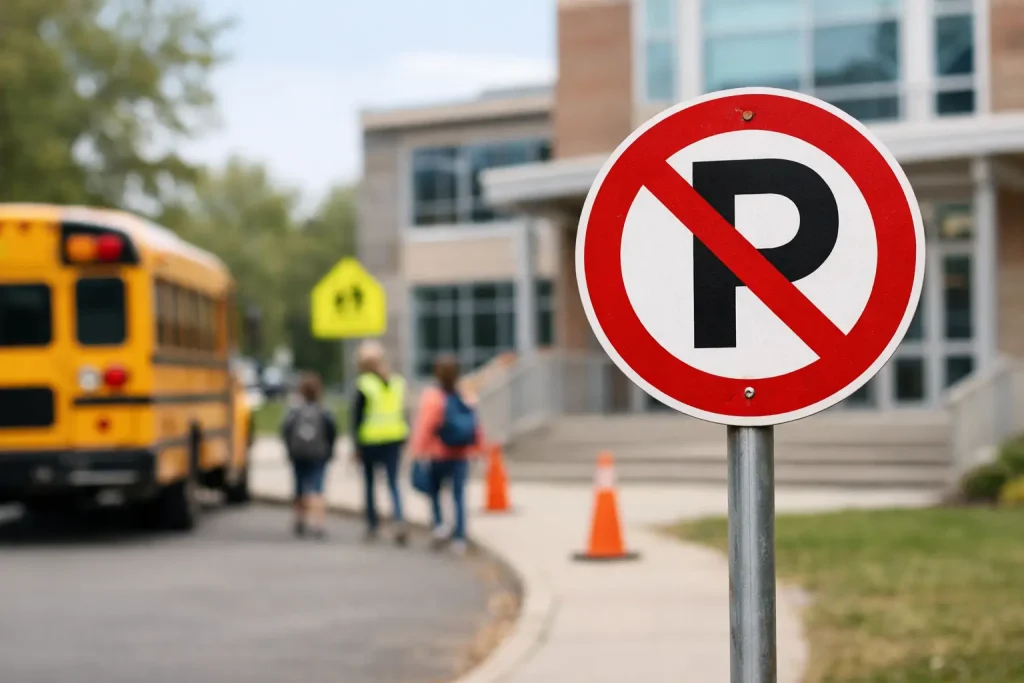
The most difficult parking problem is often not the car that stays all day. It is the vehicle that stops for two minutes on a zig-zag line, across a gate or beside a crossing just as pupils are arriving. Clear no parking signs for schools give drivers an immediate instruction at the point where safe visibility and access matter most. Used alongside sensible site procedures, they can reduce arguments at the gate, protect pedestrian routes and make the start and end of the school day easier to manage.
For schools, nurseries and colleges, a sign must do more than state a rule. It needs to be visible from a moving vehicle, understandable at a glance and positioned where the behaviour is happening. The best approach is practical: identify the risk, use the right message and support it with a layout that gives parents and visitors a safe alternative.
Why school parking needs clear, visible signs
Drop-off and collection periods compress a large number of vehicles, pedestrians, pushchairs, scooters and occasionally delivery traffic into a short window. Even a well-managed entrance can become unsafe when drivers stop on corners, block a staff car park, use a disabled bay without permission or wait in front of an emergency access point.
A professionally produced no parking sign makes the school’s expectation clear before a driver reaches the pinch point. This is especially useful where local parents, taxi drivers, visitors and new staff may all be using the site differently. A polite verbal reminder can help, but it cannot be present at every gate, every day. Permanent signage provides a consistent instruction for everyone.
The wording should match the issue. A general “No Parking” message works well at a narrow access route or gate. Where stopping itself creates the danger, “No Stopping” is more appropriate. At a fire appliance route, a direct message such as “Keep Clear – Emergency Access” leaves little room for misunderstanding. Signs for disabled bays, staff-only areas and visitor parking should also state who may use the space and any requirement to report to reception.
Start with the risk, not the sign style
Before ordering signs, walk the site at arrival and collection time. A view from the office rarely shows the full problem. Observe where cars queue, where children cross and whether drivers can see a sign before committing to a manoeuvre. Speak to staff who supervise the gate, as they will usually know the repeat problem locations.
A short site review should consider:
- blocked entrances, gates, dropped kerbs and emergency routes
- poor visibility at junctions, crossings and bends
- informal stopping areas that force pupils into the road
- conflict between pedestrians, vehicles, cycles and deliveries
- places where parents need a clear alternative for dropping off or waiting
This review avoids a common mistake: putting a sign where it is easy to install rather than where it can change behaviour. A sign hidden behind a hedge, parked van or open gate will not solve a traffic-flow problem. Equally, several signs placed too close together can become background noise.
For larger sites, a simple annotated plan is worthwhile. Mark entrances, vehicle gates, pedestrian routes, accessible bays, visitor spaces, staff parking and delivery access. It helps estates teams and school leaders agree priorities, and it gives a supplier the information needed to advise on suitable sign types, sizes and fixing options.
Choosing no parking signs for schools
No parking signs for schools should be chosen for the people using them, not just for the wording on the face. Parents may only have a few seconds to read a sign while watching for pedestrians and looking for a safe place to stop. Visitors may not know which entrance is in use or where they are permitted to park. A clear symbol, concise wording and strong contrast are usually more effective than a long explanation.
At the roadside or entrance, use a sign large enough to be read before drivers reach the restricted area. At a car park bay or internal gate, a smaller sign may be sufficient because vehicles are moving more slowly. Weather-resistant materials and secure fixings are essential for external school grounds, particularly where signs are exposed to rain, wind, cleaning and regular use.
Colour and tone also deserve thought. A red prohibition symbol communicates the restriction quickly. However, a school can still keep its presentation respectful and welcoming. “Please keep this entrance clear” can be effective where cooperation is likely, while “No Parking – Keep Clear at All Times” is better for a repeatedly blocked access point. The aim is not to make every message severe. It is to make the instruction proportionate to the risk.
Customised signs can be particularly useful when a standard notice does not explain the site arrangement. A school name, gate reference, restricted hours or a specific instruction such as “No Parking or Waiting – Pupils Crossing” can remove ambiguity. Consistent school colours and a recognisable layout also help parents identify official notices rather than temporary paper signs.
Match the message to the location
At a main entrance, combine parking control with wayfinding. A visitor who sees “No Parking” but no indication of reception or visitor parking may simply stop elsewhere inappropriately. A concise companion sign can direct them to the correct route.
Near a pedestrian gate, messages should focus on clear sightlines and safe crossing. “Keep Clear – Children Crossing” is more meaningful than a generic instruction when the hazard is visibility. At service areas, delivery and refuse vehicle access may need a timed restriction so that suppliers understand when the route must remain free.
For staff car parks, clear bay marking and permit information can prevent confrontations during busy periods. If parents regularly use a staff area for quick collection, signage should be paired with a communicated alternative, such as a designated collection point or agreed short-stay area. A rule without a workable option is much harder to maintain.
Understand the limits of school-site signage
School signage is a valuable management tool, but it does not automatically create a legally enforceable parking restriction on a public road. Highway restrictions, including yellow lines and official school entrance markings, are normally managed by the relevant local highway authority and can require traffic regulation orders, formal signs and enforcement arrangements.
Where the issue is on the public highway outside the gates, contact the local authority road safety or parking team and keep a record of incidents. Photographs, dates, near misses and staff observations can help demonstrate the need for measures such as road markings, patrols, a crossing assessment or revised traffic arrangements.
Within private school land, signs set the conditions for using the site and support staff when asking drivers to move. Their effectiveness depends on clear placement, consistent enforcement and sensible access control. If barriers, gates or cones are used, ensure emergency services, accessible parking users and authorised deliveries can still gain access without delay.
Make signs part of a wider school-gate plan
A sign works best when it reinforces routines that families already understand. Include parking expectations in welcome packs, newsletters, parent communications and visitor information. At the start of a new term, a brief reminder can be more effective than waiting for congestion to return.
Site teams should also review whether the physical layout supports the message. Are pedestrian gates clearly separated from vehicle entrances? Is the crossing point obvious? Can parents turn around safely without reversing near children? Is there a practical place for taxis or minibuses to wait? These are operational questions, but they directly affect whether drivers comply with signage.
Pavement signs can reinforce a temporary message at collection time, provided they do not obstruct the footway or create a trip hazard. Banners and entrance signs can support a broader campaign such as “Protect Our Children, Turn Off Your Engine”, helping schools address both parking behaviour and idling. The key is consistency: the message at the gate, in parent communications and on the ground should point in the same direction.
Signs 2 Schools can help education settings select school-focused parking control signage that is clear, durable and suited to the realities of busy gates, car parks and access routes.
A well-positioned sign will not remove every parking pressure, particularly where space around the school is limited. It does, however, give staff a clear, visible standard to uphold and gives every driver the same fair instruction. Start with the location where one parked car creates the greatest risk, then build a calmer and safer route through the rest of the site.