01274 532 100


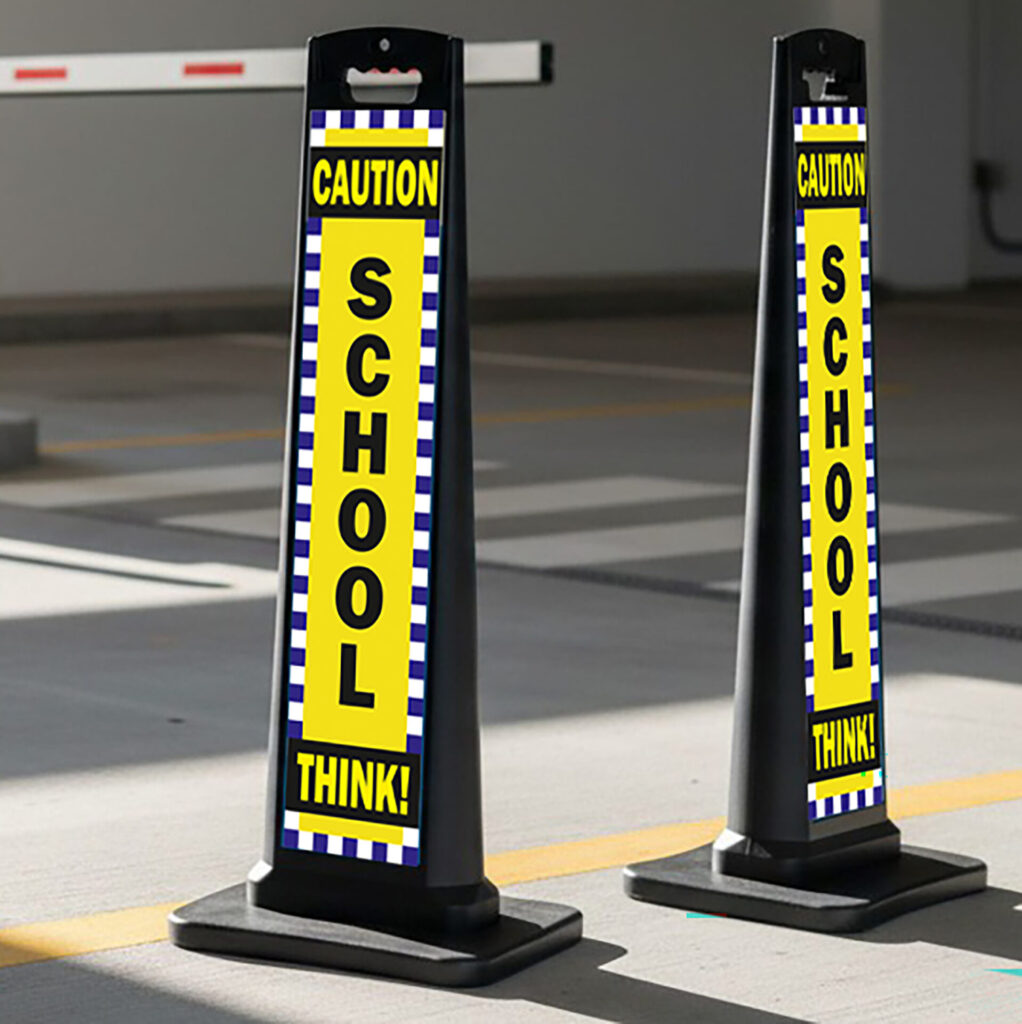
The busiest ten minutes of the school day can create the greatest safety risk. Parents arriving late, vehicles reversing near pedestrian routes and delivery drivers searching for reception all place pressure on a limited space. Well-positioned school car park management signs give drivers clear instructions before poor parking, congestion or unsafe manoeuvres become routine.
For schools, this is not simply a question of putting up a “No Parking” sign. A successful approach considers where people enter, who needs access, when the site is busiest and how messages can be understood at a glance. The right signs support safer behaviour while helping staff manage the gate with fewer repeated conversations.
Start with the real problems on site
Every school car park works differently. A rural primary school may have limited roadside space and a single entrance. A large secondary school may need to manage staff parking, sixth-form drivers, minibuses, visitors, contractors and deliveries across several routes. Before selecting signs, walk the site at drop-off and collection time and identify where confusion begins.
Look for vehicles stopping on zig-zag markings or across entrances, parents using staff bays, cars idling close to gates, pedestrians crossing without a clear route and drivers turning where children are walking. Also consider the less obvious issues: a visitor who cannot find reception may drive around the site, while an unmarked delivery point can lead to lorries waiting in the wrong place.
A sign should answer a specific question for the person behind the wheel. Can I park here? Where do visitors report? Is this route for authorised vehicles only? Must I keep this entrance clear? Messages that are vague, hidden or placed after the decision point will have limited effect.
Build a clear parking journey
The most effective school car park management signs work as a sequence, not as isolated notices. Drivers should receive direction before they reach the point at which they need to act.
At the site entrance
Entrance signs set the rules from the outset. They can identify the school, direct visitors to reception, make clear that drivers must proceed slowly and state any access restrictions. Where appropriate, a sign can request that gates and entrances are kept clear, helping to protect visibility for children crossing.
If safeguarding arrangements require all visitors to report to reception, this should be prominent and simple. A visitor parking sign is far more useful when it includes an arrow or a clear location, rather than simply stating that visitor parking exists.
Through the car park
Inside the site, directional signs reduce hesitation and unnecessary vehicle movement. Clearly marked staff parking, visitor spaces, disabled bays, delivery areas and no-parking zones help drivers understand where they belong.
Bay signs should be visible from a vehicle, not only once the driver has already parked. Durable post-mounted signs are often best for permanent allocation, while wall-mounted signs can work well where buildings or fencing sit close to parking spaces. Pavement signs may help reinforce temporary instructions at busy times, but they must never obstruct pedestrian routes or create a trip hazard.
At gates and pedestrian crossings
The space nearest the school gate needs particularly careful attention. Signs asking drivers not to park, stop or wait should be positioned where the instruction is visible before the vehicle reaches the gate. Messages such as “Keep Clear” or “No Parking – Access Required at All Times” are direct and easy to understand.
Where families regularly wait with engines running, anti-idling signs provide a useful reminder. “Protect our children, turn off your engine” connects the request to pupil health and makes the reason clear without sounding confrontational. The message is most effective when it is supported by the school’s wider communication with parents and carers.
Choose messages that drivers will act on
A car park sign cannot solve every parking issue on its own. However, it can remove ambiguity and give staff a consistent point of reference when speaking to drivers. Clear wording is especially important during the first weeks of term, when new families, staff and visitors are learning the site layout.
Keep each sign focused on one action. “Staff Parking Only”, “Visitor Parking”, “Deliveries This Way” and “Keep Entrance Clear” are stronger than lengthy paragraphs. If an explanation is needed, place it beneath the main instruction in smaller text. Drivers should be able to take in the essential message without leaving their vehicle.
Tone matters. A firm instruction is appropriate where access, emergency routes or disabled bays are concerned. In other places, a polite request can gain better co-operation. For example, an anti-idling message or a reminder to drive slowly is more likely to be received positively when it explains that children may be nearby.
Avoid making claims that the school cannot enforce. Terms such as “Penalty Charge Notice” have specific legal meanings and should not be used casually. If a school uses a parking enforcement provider, its signs must reflect the agreed terms and applicable requirements. For most school sites, clear allocation, good visibility and consistent communication prevent more issues than overly aggressive wording.
Make signs visible, durable and suitable for a school setting
A faded notice fixed behind a hedge is not a management system. External signs need to withstand British weather, remain legible in low light and be placed at an appropriate height for the people who need to see them.
Consider the viewing distance and speed of approaching vehicles. Entrance and directional signs need larger text than a small bay marker. Strong colour contrast improves readability, while recognisable symbols can help visitors understand an instruction quickly. Red is useful for prohibitions, but too many red signs across the site can make important warnings easier to ignore.
Schools should also consider how signs look alongside the wider environment. Safety messaging needs to be prominent, yet the entrance should still feel welcoming to families and visitors. Education-focused designs can balance clear instructions with a friendly appearance, particularly around primary schools and nurseries.
Materials and fixing methods depend on the location. Aluminium composite signs offer a smart, hard-wearing solution for many external applications. Rigid signs mounted to posts or railings suit entrances and parking bays, while self-adhesive notices may be appropriate for internal gates, windows or temporary information. A site manager should check that signs are fixed securely, do not block sightlines and cannot create a hazard if damaged.
Support signs with practical site management
Signs work best when they are part of a routine that staff, parents and visitors understand. If visitor bays are regularly occupied by staff, or a delivery area is used for informal parking, the message on the sign will quickly lose authority. The school’s parking arrangements need to match what is displayed.
At the start of each term, include key parking expectations in parent communications and visitor information. Explain where to park, which entrance to use, why gates must remain clear and what to do when visitor spaces are full. A simple site map can help when a large campus has multiple entrances.
It is also worth reviewing arrangements after changes to the site. New fencing, a building project, altered gate times or increased pupil numbers can all affect traffic flow. Temporary signs may be needed during works or events, but they should be removed promptly once the situation has changed. Outdated instructions create confusion and reduce trust in the signs that remain.
Common gaps to check
A quick review often reveals small issues that have a large impact. Check whether visitors can find reception without driving through staff areas, whether disabled parking is clearly marked, whether fire access is protected and whether delivery drivers know where to wait. Consider signs for speed limits, one-way routes, parent drop-off points and coach or minibus access where these apply to your site.
There is no benefit in adding every possible message. Too many signs compete for attention. Prioritise the locations where a wrong decision could place pupils at risk, obstruct essential access or cause regular conflict at the gate.
A safer arrival starts before the school gate
School car park management signs give schools a practical way to set expectations, direct vehicles and protect pedestrian areas. When the wording is clear, the signs are positioned before key decision points and the site rules are applied consistently, they help reduce daily pressure on staff as well as risk to pupils.
A well-planned sign scheme does more than control parking. It tells every parent, visitor and contractor that the school takes safety seriously, has thought through the journey around its grounds and expects everyone on site to play their part.