01274 532 100


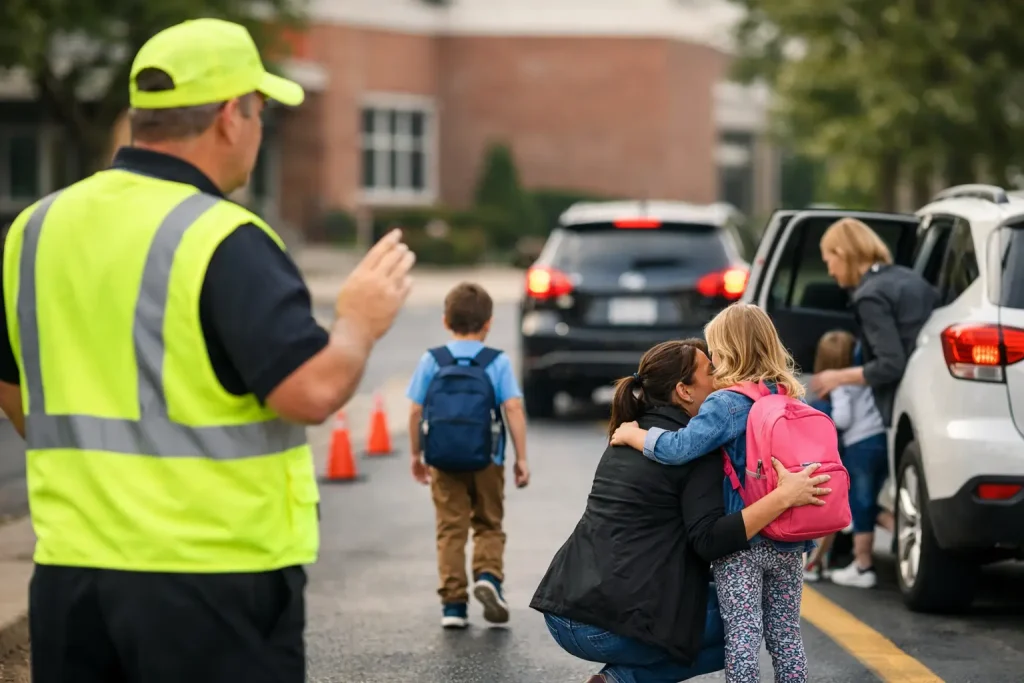
The busiest ten minutes of the school day can create the greatest risk. Cars stop where they should not, children step out between vehicles, parents turn in restricted areas and staff are left trying to manage traffic while welcoming pupils. Effective school drop-off safety is not one sign or one rule. It is a clear, consistent system that makes the safe choice obvious for every driver, pedestrian and visitor.
For school leaders, site teams and business managers, the aim is practical: reduce conflict at the gate, keep routes visible and give families clear instructions before poor parking becomes a daily habit. The right approach will vary according to the size of the site, surrounding roads and available parking, but the principles are the same.
1. Start with the journey pupils actually take
Before ordering signs or changing barriers, observe arrival and collection for several days. Do not only look at the main gate. Watch where vehicles queue, where children cross, which gates are used by pedestrians and whether delivery vehicles or staff cars share the same space.
A useful site review follows a child from pavement to classroom entrance. Are they required to cross a live vehicle route? Can a driver see them when reversing or pulling away? Is the walking route wide enough for pushchairs, scooters and groups of pupils? These questions identify the points where a small change can have a significant effect.
Record repeat issues rather than isolated incidents. A parent briefly stopping on zig-zag markings may be a one-off. A queue regularly blocking a junction, however, is a traffic-flow problem that needs a visible and sustained response. Involve the headteacher, site manager, office team and, where appropriate, governors or trust estates staff. Each will see different parts of the routine.
2. Make traffic instructions visible before drivers reach the gate
A message seen after a driver has stopped is often too late. Parking control signs should appear at the approach to the school, at the entrance and wherever a restriction is most likely to be ignored. Repetition is not excessive when drivers are managing children, other vehicles and limited time.
Use direct wording that explains the required action. Signs such as ‘Keep Clear’, ‘No Parking’, ‘No Stopping’, ‘Staff Parking Only’ and ‘Please Drive Slowly’ remove uncertainty. A ‘Protect Our Children, Turn Off Your Engine’ sign can also support anti-idling expectations without sounding confrontational.
The design matters as much as the message. Large text, strong contrast and recognised symbols can be understood from a moving vehicle. Position signs at a sensible viewing height and check that hedges, parked cars, bins or seasonal displays do not obscure them. For areas without a suitable wall or fence, freestanding pavement buddies can put an important instruction directly in a driver’s line of sight.
3. Separate people and vehicles wherever possible
The safest route is one that does not rely on a child judging vehicle speed or a driver spotting a small pedestrian at the last moment. Where space allows, create a defined pedestrian route from the pavement or parking area to the entrance using gates, railings, barriers, markings and clear directional signage.
A separate route is particularly valuable at nursery and primary settings, where younger children may suddenly change direction. At secondary schools, the challenge may be higher volumes of pupils arriving on foot, by bicycle and on buses. The solution is not identical, but the need for clear priority remains.
Where vehicles must cross a pedestrian route, make the crossing point unmistakable. Use signs to slow approaching drivers and direct pupils to the intended place to cross. Avoid creating a false sense of security: markings and signs support supervision, but they do not replace sensible vehicle management.
4. Create a drop-off routine parents can follow
Parents are more likely to comply when they understand exactly what the school expects. A vague request to ‘park considerately’ is well meant but difficult to apply on a congested street. A clear routine tells drivers where to enter, where to wait, whether they may use the site, where they must not stop and which gate their child should use.
If a one-way system is appropriate, reinforce it with arrows and entry and exit signs at every decision point. If the car park is for staff only, state this before vehicles enter. If families should use a nearby public car park or park-and-stride location, communicate that in advance through normal school channels and repeat the message on site.
There are trade-offs. A managed drop-off lane can reduce roadside congestion, but it needs enough space, staff oversight and a rule that drivers do not leave their vehicles. Closing a gate to vehicles may improve safety inside the boundary, but can shift parking pressure onto neighbouring streets. Review the impact after changes are introduced and adjust rather than assuming the first arrangement is final.
5. Use signage to support staff, not replace them
Staff presence at the gate can calm a busy arrival period, especially after a change to routes or parking arrangements. However, staff should not have to spend every morning explaining the same restriction or directing every vehicle. Good signage provides the consistent instruction, leaving staff free to supervise pupils and deal with exceptions.
Place signs where the decision happens. A ‘No Parking’ sign belongs before the narrow access route becomes blocked. A ‘Keep Entrance Clear’ sign belongs beside the entrance, not only on a noticeboard. Directional signs should point clearly towards reception, visitor parking, deliveries and the correct pedestrian entrance.
Temporary situations also need clear communication. Building works, wet-weather access changes, school events and road closures can all alter normal movement around the site. Durable temporary signs and pavement signs help protect the routine when conditions change quickly.
6. Consider the whole day, not only morning arrival
School drop-off safety is often discussed as a morning issue, but collection can be more difficult. Parents may arrive earlier and wait, after-school clubs can stagger departures and poor winter light reduces visibility. A route that works at 8.45am may be confusing at 3.15pm.
Check lighting, sightlines and sign visibility during darker months. Reflective or highly visible signs can be useful near vehicle routes, while entrance and wayfinding signs help visitors avoid walking through staff parking or service areas. If deliveries are scheduled close to arrival or collection, consider whether times can be changed or whether a separate delivery procedure is needed.
Do not overlook visitor management. Clearly signed reception routes, visitor parking and safeguarding notices prevent unfamiliar drivers from searching around the grounds at the busiest time. This protects pupils while also giving visitors a more professional first impression.
7. Keep the message consistent and maintained
A safety system loses authority when signs are faded, contradictory or damaged. Inspect external signs routinely, particularly after severe weather or site works. Replace worn items and remove outdated notices promptly. Too many old messages compete for attention and make essential instructions easier to miss.
Consistency also matters in communications. If the school asks parents not to stop at the gate, staff should not direct them there on busy days. If a staff-only car park is enforced, its purpose should be explained clearly. Families are more likely to support measures that are fair, predictable and focused on pupil safety rather than convenience.
When new signage is introduced, explain the reason behind it. A short message that links the change to children’s visibility, emergency access or safer crossing points is more persuasive than a rule on its own. Repeat it at the start of term, after holidays and whenever new families join the school.
Build a safer arrival, one clear decision at a time
The most effective school gates feel orderly rather than heavily controlled. Drivers know where to go, pedestrians have a clear route and staff are not forced to manage avoidable conflict. Signs 2 Schools helps education settings turn these everyday requirements into practical, durable site solutions. Begin with the pinch points you can see each morning, then give every person approaching the gate a clear instruction they can follow.