 01274 532 100



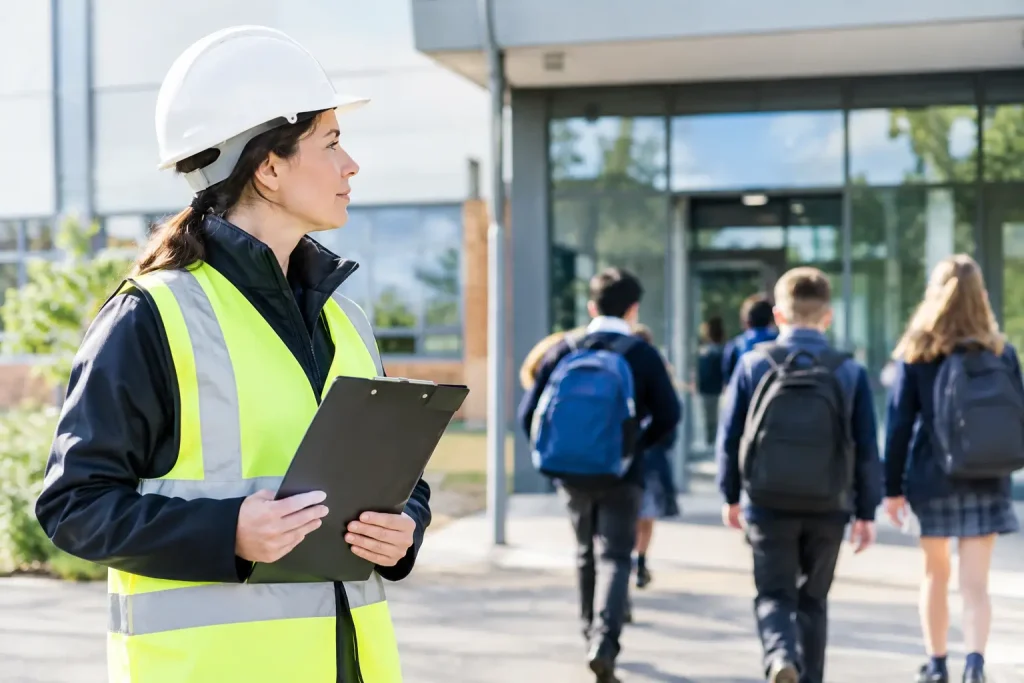
The school gate at 8.30am is often the most revealing part of a site safety review. Cars stop where they should not, families cross between moving vehicles, delivery drivers look for reception, and a visitor may be unsure which entrance to use. These are not minor inconveniences. They are practical risks that clear planning, well-positioned signs and regular checks can reduce.
A useful review looks at the journey through the site as pupils, parents, staff and visitors experience it. It should identify what is unclear, what has changed and where behaviour is creating avoidable risk. For busy schools, this is as much about communication and day-to-day usability as it is about formal compliance.
What a school site safety review should cover
A site safety review is a structured walkaround and assessment of the areas where people, vehicles, buildings and school routines meet. It does not replace formal risk assessments, statutory checks or professional advice where these are required. Instead, it gives the school a practical picture of whether its environment is helping people make safe decisions.
Start with the busiest points: the perimeter, gates, car park, drop-off area, main entrance, reception route and playground access. Then consider less obvious spaces, such as fire exits, temporary building works, delivery areas, staff parking and routes used during evening events.
The review should ask simple questions. Can a parent immediately see where they may park? Does a visitor know where to report? Are pupils being directed away from vehicle routes? Are key safeguarding messages visible before someone reaches the building? If the answer relies on a member of staff being present to explain it, the signage or layout may need attention.
Begin at the road, not the reception desk
Traffic management is one of the most common school-site concerns because it changes quickly at arrival and collection times. A road that appears manageable at midday can become difficult when cars queue, children are excited and drivers are under pressure to leave.
Walk the perimeter at the times when it is busiest. Look for vehicles stopping on zig-zags, blocking access points, mounting pavements or waiting with engines running. Check whether disabled parking, visitor parking and staff parking are clearly separated where needed. Consider whether drivers can understand the intended route without making last-minute decisions.
Signs should support the behaviour the school needs. A clear message such as “Protect our children, turn off your engine” makes the issue immediate. Parking control signs, no stopping signs, speed reminders and entrance direction signs can all help, but only if they are installed where a driver has time to read and act on them.
There is a trade-off to manage. Too many signs can become visual noise, particularly near a gate or car park entrance. Prioritise the messages that prevent the greatest risk, use consistent wording and make sure signs are not hidden by hedges, parked vehicles or seasonal displays.
Check pedestrian routes separately
A marked route is only useful if people actually use it. Observe whether pupils and families cut across vehicle areas, whether barriers create pinch points, and whether paths are usable in poor weather. Slippery surfaces, poor lighting, loose edging and obstructed walkways should be recorded alongside signage issues.
Where a route changes during the day, such as a gate that is locked after morning drop-off, make that change clear. Temporary signs can be suitable for short-term arrangements, but long-running problems usually need a more permanent and durable solution.
Make entrances clear and controlled
The main entrance sets the tone for visitors, but it also plays a safeguarding role. A person arriving on site should know exactly where to go, how to report to reception and which areas are not for public access.
Review the approach from the car park and pedestrian gate. Is reception visible? Is the entrance named clearly? Are visitors being directed past a suitable reporting point rather than towards teaching areas? If there are separate entrances for nursery, sixth form, community users or contractors, each needs clear identification.
Safeguarding signs should be direct and professionally presented. Messages about signing in, wearing visitor badges, not using mobile phones in sensitive areas, photography restrictions or DBS requirements should be easy to find at the point they matter. They should not be buried among old event notices.
A welcoming environment and a controlled environment are not opposites. Child-friendly entrance signs, school colours, wall graphics and clear wayfinding can make visitors feel expected while still setting firm boundaries. The best signage tells people what to do rather than simply listing what they must not do.
Review safety information where decisions are made
Safety information is most effective when it appears at the moment someone needs it. A fire action notice belongs where occupants can see it. A warning about a restricted area belongs before the boundary, not beyond it. A sign directing contractors to reception should be visible from the delivery approach, not only on the reception door.
During the walkaround, look for faded signs, inconsistent symbols, handwritten notices and outdated instructions. These weaken confidence and can create confusion. Check that emergency exits are clearly identified and that signs are not obscured by furniture, displays or stored equipment.
Pay particular attention to areas that are used differently throughout the year. Examination rooms may require quiet-zone or mobile phone notices. Sports days can create new pedestrian routes. Open evenings bring unfamiliar visitors onto site. Building work needs clear contractor, delivery and exclusion-zone communication.
Involve the people who see the problems first
A site manager may spot a damaged sign or blind corner, while office staff may know that visitors repeatedly arrive at the wrong door. Teaching staff can identify a gate that causes congestion at the end of the day, and pupils may point out a route adults overlook.
Gather these observations before the review, then test them on site. It is useful to keep a simple record with the location, issue, likely consequence, action required and person responsible. Photographs can help show why a change is needed, especially when discussing priorities with a trust, governing body or estates team.
Not every action will require new signage. Some issues call for changes to supervision, gate-opening times, parking arrangements or physical barriers. However, signs are often the clearest and quickest way to explain a new arrangement consistently to every person entering the site.
Turn findings into an achievable action plan
The value of a school site safety review lies in what happens afterwards. Avoid a long list that is difficult to fund or manage. Group actions by urgency and focus first on risks involving pupils, moving vehicles, access control, emergency routes and safeguarding.
For each sign or display required, specify its purpose, location, size, wording and fixing method. Outdoor products need to withstand weather and regular use. Freestanding pavement signs can be effective for daily messages but need to be brought in or secured appropriately. Permanent entrance, parking and wayfinding signs need materials and fixings suited to their location.
Custom signage is often worthwhile where a standard message does not reflect the site layout. A large campus, shared premises or multiple entry points may need a clear site map, branded directional signs or a monolith totem sign that helps visitors orient themselves before they reach the building. Smaller schools may achieve more with a focused set of parking, reception and safeguarding signs.
Revisit the site after changes are made
Once improvements are in place, observe the area again during a busy period. Are drivers following the intended route? Are visitors reporting correctly? Do families notice the message before they park? A sign that looks excellent from close range may be ineffective from a moving car or crowded pavement.
Schools change constantly. New buildings, revised gate arrangements, growing pupil numbers and different community use can all alter the risks on site. A planned review each year, plus a check after any significant change, keeps safety communication current rather than reactive.
A safer school site is built through clear choices made easier for everyone who uses it. When parents can park responsibly, visitors know where to go and pupils have protected routes through the grounds, the school day starts with fewer avoidable risks and a calmer welcome.


