 01274 532 100



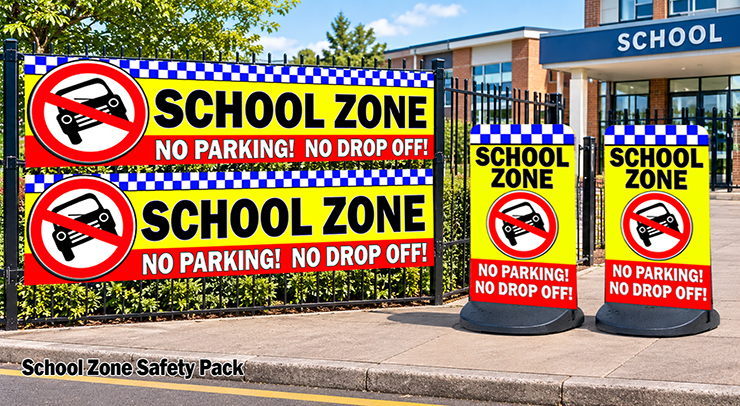
The busiest ten minutes of the school day can create the greatest risk. Cars stop where they should not, children cross between vehicles, parents make hurried U-turns and staff are left trying to manage traffic while welcoming pupils. To reduce school drop-off congestion, schools need more than a polite reminder in the newsletter. They need a clear, visible and consistently managed plan for the school gate.
The right approach depends on the layout of the site, the surrounding roads and how pupils travel. A small village primary school faces different pressures from a large secondary school on a busy urban route. However, the principles are the same: make expectations obvious before drivers reach the gate, separate people from moving vehicles where possible, and give families practical alternatives to stopping directly outside school.
Start with the real causes of congestion
Before ordering signs or changing routines, observe arrival and collection for several days. Stand at different points around the site and note where vehicles queue, where parents park, which routes children use and where staff regularly intervene. It is useful to include wet-weather days, when more families may choose to drive.
Congestion is often caused by a small number of repeat behaviours. These may include parents waiting on zig-zag markings, stopping on corners, idling outside entrances, blocking residents’ driveways or turning in unsuitable spaces. In some schools, the issue is not poor behaviour but uncertainty. Drivers may not know where the entrance is, whether a car park is staff-only, or where they can safely wait.
Speak to staff, crossing patrols, neighbours and, where appropriate, the local authority. Their observations can identify risks that are less obvious from the gate, such as obstructed sightlines at a junction or a shortcut pupils use through a car park. This gives the school a sound basis for deciding what must change first.
Use signage to reduce school drop-off congestion
A sign is most effective when it gives a driver one clear instruction at the moment they need it. General messages about considerate parking have a place, but specific signs tend to change behaviour more reliably. Positioning matters just as much as wording. A sign hidden behind parked cars or placed after the decision point will not prevent unsafe stopping.
Make the approach clear before drivers arrive
Place advance signs on the routes used by families, not just immediately outside the gate. Messages such as “No stopping”, “Keep clear”, “Staff parking only” or “Drop-off point ahead” allow drivers to make a decision before they join the queue.
Where school grounds have separate pedestrian and vehicle entrances, clear directional signs prevent parents from following staff traffic into restricted areas. This can be particularly valuable on shared sites, academy campuses and schools with nurseries, sports facilities or community users.
Pavement signs can also help communicate temporary arrangements, such as a changed entrance during building work or an event that will increase traffic. They should be placed carefully so they do not obstruct wheelchair users, pushchairs or the pedestrian route.
Reinforce safe parking and engine-off messages
Parking control signs should be direct, polite and easy to read from a vehicle. A message asking drivers not to block gates, access routes or neighbours’ driveways is more useful when the exact restricted area is obvious. Signs should also identify private staff parking and delivery access where these are frequently blocked.
Anti-idling signs are a practical addition where vehicles regularly wait. “Protect our children, turn off your engine” connects the request to pupil health and makes the reason clear. It will not solve a queue on its own, but it supports a culture in which the school gate is treated as a safety zone rather than a waiting area.
For recurring issues, durable external signs are preferable to paper notices. Families see them every day, including those who may not read electronic communications or who are new to the school.
Keep messages child-friendly but unambiguous
Schools rightly want their entrance to feel welcoming. Safety signage does not need to look hostile or overly corporate. Bright, school-appropriate designs, well-chosen colours and concise wording can communicate firm boundaries while fitting the character of the site.
The language should still be unambiguous. “Please do not park here” is clearer than a long explanation. If a route is for pedestrians only, say so. If collection takes place from a different gate, use directional signs that can be understood quickly by a visitor unfamiliar with the grounds.
Create a safer arrival routine
Signage works best alongside an agreed routine that staff and families can follow. A drop-off system should reduce uncertainty rather than add another set of rules that are difficult to police.
If the site permits, consider a designated drop-and-go zone. This is not a parking bay. Drivers pull forward, pupils leave the vehicle on the safer side where possible, and the car moves on promptly. The zone needs clear markings, prominent signs and staff supervision while families become familiar with the arrangement. It also needs enough length to prevent vehicles from stopping on the road while waiting to enter.
Some schools find staggered arrivals useful, especially where a large number of families arrive within a very short window. This can be organised by year group, entrance or a flexible ten-minute arrival period. The trade-off is that it may affect staff deployment and family routines, so it should be tested rather than assumed to be the answer.
Walking buses, park-and-stride locations and active travel initiatives can reduce the number of cars at the gate. These options require safe routes and reliable information. A suggested parking location is only helpful if parents understand where it is, how to walk from it, and why the school is asking them not to drive to the entrance.
Design the site around people, not parked cars
Physical layout can either support safe behaviour or make it difficult. Look closely at the route from the pavement to the school entrance. Pupils should not have to weave through staff parking, cross an unmarked driveway or pass behind reversing vehicles.
Where possible, separate vehicle and pedestrian routes with gates, barriers, fencing or clearly marked walkways. Use directional signs at every decision point, particularly at car park entrances and crossings. A highly visible crossing point helps drivers anticipate people on foot and gives pupils a consistent place to cross.
Visibility is essential. Keep signs, gates and line markings clear of overgrown planting, temporary storage and parked vehicles. Review lighting for darker winter mornings and afternoons. A sign that works in bright daylight may be missed at 4 pm in December.
For sites with limited space, major physical changes may not be realistic. In that case, focus on smaller improvements with a high impact: move a sign to the approach road, mark a pedestrian route, reserve a turning space, or install a clear staff-only parking notice. Small changes can remove the uncertainty that causes vehicles to hesitate or stop in the wrong place.
Communicate expectations consistently
Parents are more likely to cooperate when the school explains the purpose of a change and applies it consistently. Use the same wording on gate signs, newsletters, induction information and messages to new families. If signs state that access must be kept clear, staff should be clear about which access and at what times.
Avoid relying on staff to resolve the same parking dispute every day. Staff presence is valuable at the beginning of a new arrangement and during busy periods, but the layout and signage should do much of the work. Where unsafe or illegal parking persists, record dates, times and locations, then seek advice from the relevant local authority parking or highway team. Schools should not attempt to enforce public-road restrictions beyond their authority.
It can also help to share positive results. If a revised route has improved pedestrian safety or reduced idling, tell families. Acknowledging cooperation encourages the majority who are already trying to do the right thing.
Review after the first few weeks
Any new traffic measure needs a settling-in period. Watch whether queues have moved rather than disappeared, whether parking has shifted into nearby residential roads, and whether pupils are using the intended walking routes. Ask staff what is working at the point of arrival, not only what looks good on a site plan.
Review signs for legibility, placement and relevance. Temporary notices should be removed when no longer needed, while permanent messages should remain clean, readable and firmly fixed. Signs 2 Schools can help schools select school-focused parking, road safety and wayfinding signage that suits the practical demands of their site.
A safer school gate is built through repeated, visible cues and routines that families can understand at a glance. Start with the place where confusion is greatest, make one clear improvement, and let every morning reinforce the safer behaviour you want to see.


