01274 532 100


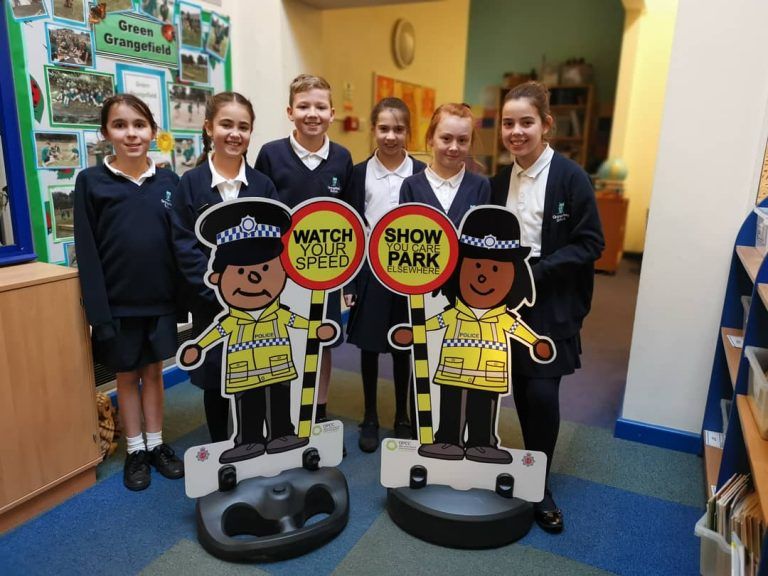
The busiest five minutes of the school day can create the biggest safety challenge. Cars arrive, pupils cross between vehicles, families stop to talk and delivery drivers may be looking for an entrance. Understanding how schools use pavement buddies helps site teams turn a crowded frontage into a clearer, safer and more welcoming space without relying on staff to repeat the same message every morning.
Pavement buddies are portable, highly visible signs designed to sit where people need a prompt: at the school gate, beside a pedestrian route, near a car park entrance or outside reception. Their strength is not simply that they display a rule. They put a short, child-focused message directly in the path of parents, visitors and drivers at the moment a decision is being made.
How schools use pavement buddies at the gate
For many schools, the first use is managing drop-off and collection. A well-positioned pavement buddy can remind drivers not to park on zig-zag markings, keep drives clear, avoid blocking neighbours’ access and switch off their engines while waiting. These are familiar requests, but a prominent sign makes them part of the site routine rather than a message delivered only when a member of staff is available.
Messages such as “Protect our children, turn off your engine” work because they explain the purpose behind the request. Parents are more likely to respond to a clear appeal to pupil welfare than to a long list of restrictions. The same applies to parking messages. “Keep clear – emergency access” is direct, practical and difficult to misunderstand.
Placement matters as much as wording. A sign set too far from the decision point may be missed; one placed where it obstructs the pavement creates another problem. Schools commonly position pavement buddies just before a gate, beside an approach to the car park or at the point where drivers are tempted to stop. The sign should be visible to approaching adults but leave adequate room for pushchairs, wheelchairs and pedestrian flow.
A pavement buddy is most effective as part of an agreed arrival plan. It supports staff on gate duty, parent communications and clear road markings, rather than replacing them. Where a public highway, traffic regulation order or enforcement issue is involved, the school should also work with the relevant local authority. A portable sign can encourage better behaviour on site, but it does not create legal parking restrictions.
Reinforcing road safety without creating clutter
Children learn best from messages they see consistently. Pavement buddies can reinforce the routines schools already teach through assemblies, classroom work and road safety campaigns: stop, look and listen; walk with an adult; use the designated crossing point; and do not run between parked cars.
At a primary school or nursery, child-friendly graphics and concise wording help younger pupils recognise the message. At a secondary school or college, a more direct approach may be appropriate, particularly around cycle storage, vehicle gates and busy pedestrian crossings. The right design depends on the age of pupils, the site layout and who needs to act on the instruction.
The aim is not to cover every available space with signs. Too many competing notices can make even vital information disappear into the background. Start with the points where poor decisions have the clearest consequences: a blind corner, a vehicle entrance, an emergency access route or a queueing area. One clear pavement buddy in the right position will usually achieve more than several signs carrying different messages.
Supporting safer walking routes
Large sites often have separate pedestrian and vehicle routes, but visitors do not always know where they should go. A pavement buddy can direct families towards the main entrance, remind pupils to stay on the footpath or identify a safer walking route from a designated parking area.
This is especially useful during the first weeks of term, after a change to gate arrangements or when temporary building works alter familiar routes. Portable signage gives site teams flexibility. It can be moved to support a revised one-way system, an open evening, sports day or a period of contractor activity, then stored when it is no longer needed.
That flexibility should be managed carefully. Staff should know who is responsible for putting signs out and bringing them in, and where they are stored. A sign that is left in a windy location, placed in a narrow route or allowed to become dirty and faded will not present the professional, safety-conscious image a school wants to maintain.
Making visitors feel informed from arrival
Pavement buddies are not only for drivers. They can improve the visitor experience at the entrance by answering the questions people have before they reach reception. A clear sign can point visitors towards the correct door, ask them to report to reception, remind them that the site is smoke-free or direct them to a waiting point.
For safeguarding, the wording needs to be firm without feeling unwelcoming. “All visitors must report to reception” is simple and appropriate. It supports the school’s visitor procedure by making the expected action visible from the moment someone enters the grounds. On larger campuses, a pavement buddy can also reduce the number of people walking around the site trying to find the office.
A welcoming message has a place too. During admissions events, parent consultations and performances, portable signage can identify the relevant entrance or event location. This reduces pressure on reception and helps visitors arrive with confidence. It is a small detail, but first impressions of a school are often formed before a visitor reaches the front door.
Using pavement buddies for temporary events and changing conditions
A fixed sign is useful for a permanent rule. Pavement buddies come into their own when the message needs to change. Schools use them to guide visitors during open evenings, direct parents to additional parking, flag a temporary entrance or request quiet around examination rooms.
They can also support maintenance and premises activity. A clear temporary warning beside a wet entrance, delivery area or restricted route gives people a prompt before they enter a hazard. However, the sign should match the risk and be supported by suitable controls. A pavement buddy is not a substitute for barriers, supervision or a proper risk assessment where those are required.
For events, use the same language and visual style across signs where possible. If one sign says “Main Hall” and another says “Assembly Room” for the same destination, visitors will hesitate. Consistent terminology makes the route easier to follow and presents a more organised site.
Choosing the right message and format
Before ordering, walk the route at the time the issue occurs. View it from a driver’s seat, from the perspective of a parent with a buggy and at a child’s eye level. This often reveals whether the problem is unclear instruction, poor sign placement or a physical bottleneck that signage alone cannot solve.
Then keep the message focused. A pavement buddy should communicate one action quickly. “No parking – keep entrance clear” is more effective than a paragraph explaining the entire parking policy. If families need more detail, provide it through normal school communications and let the sign act as the timely reminder.
Consider weather exposure, daily handling and storage as well as appearance. A school gate sign will be moved, cleaned and exposed to rain more often than an occasional event sign. Durable materials and stable construction are worth considering for frequent use, while a lighter option may suit short-term indoor or sheltered applications.
Signs 2 Schools supplies pavement buddies designed around the practical messages education settings need, from parking and anti-idling prompts to visitor directions and school safety reminders. For a message unique to your site, a custom design can incorporate the wording, colours and information that staff and families already recognise.
Reviewing whether the signs are working
A pavement buddy should be reviewed like any other site safety measure. Ask gate staff whether the same parking issue is still occurring, watch how drivers approach the entrance and check whether visitors are finding reception more easily. Feedback from neighbours can also be useful where school-run parking affects the surrounding streets.
If the behaviour has not changed, do not assume the sign has failed. It may need to move closer to the decision point, use fewer words or be reinforced through a parent message. Equally, if a sign has become part of the background, changing its position for a short campaign can restore its impact.
The best pavement buddies make safe choices easier at the moment they matter. Used thoughtfully, they give staff a visible ally at the gate and help every family understand how to arrive, park and enter with greater care.